
India captain Shubman Gill has confirmed a four-pacer strategy for the opening Test in Wellington. The bigger question now is which four fast bowlers will make the final XI, with conditions at Basin Reserve expected to influence the decision.
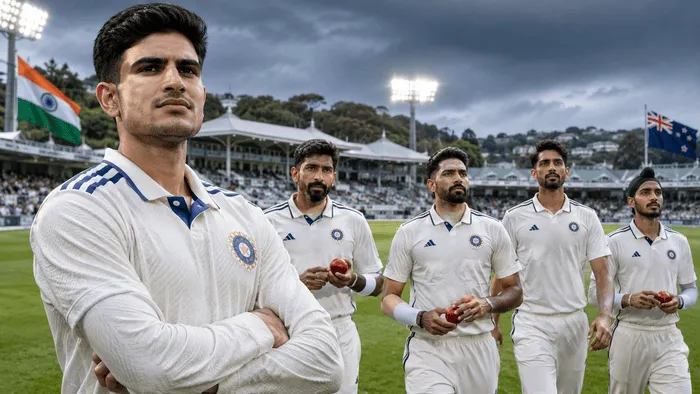
India will take a pace-heavy approach into the first Test against New Zealand, and Shubman Gill has now made the team’s broad plan clear. The India captain confirmed that the visitors intend to play four fast bowlers when the two sides meet at Basin Reserve in Wellington on November 19.
The decision is significant, but it does not mean India’s final bowling attack has already been announced. Several fast bowlers have made a strong case for selection, and the team management still has to decide which combination offers the best balance across five days of Test cricket.
Gill’s comments also point to a wider strategy: India want seven specialist batters while using their remaining places to build a flexible bowling unit. The pitch, the Wellington wind and the ability of bowlers to contribute with the bat could all influence the final selection.
Table of Contents
- Gill Confirms Four Fast Bowlers
- India’s Fast-Bowling Selection Battle
- Why India Want Seven Specialist Batters
- Basin Reserve Pitch and Wellington Conditions
- Morne Morkel’s Latest Team Update
- New Zealand’s Four-Man Pace Attack
- Rishabh Pant’s Return
- India vs New Zealand 1st Test Details
- Why the Test Matters for India’s WTC Campaign
- What to Expect from India’s Combination
- Frequently Asked Questions
Gill Confirms Four Fast Bowlers for the Wellington Test
Speaking ahead of the opening Test, Gill said India would use four fast-bowling options. He described the selection challenge as a good problem to have because several bowlers had performed well during the recent ODI series against New Zealand.
Gill explained that India need more than one type of fast bowler. The team wants someone who can make use of the new ball, bowl with pace and maintain accuracy when the surface becomes flatter and the ball gets older.
That last point matters in a five-day match. A pitch that offers movement early in the game may become easier for batters later. India’s attack therefore needs to be capable of creating chances even when the initial assistance for seamers fades.
Gill also indicated that India are considering one specialist spinner to control an end. Strong winds in Wellington can make bowling more demanding, particularly for a fast bowler operating against the wind. The team will have to balance its pace resources with the need for control.
India’s Fast-Bowling Selection Battle: Who Could Make the XI?
India’s updated Test squad includes Jasprit Bumrah, Mohammed Siraj, Prasidh Krishna, Akash Deep, Anshul Kamboj and Gurnoor Brar among its pace options. Nitish Kumar Reddy also provides an additional seam-bowling option.
Bumrah is expected to lead the attack, while Siraj brings experience and the ability to work with the new ball. The remaining places are more difficult to predict because the selectors have different skills to consider.
| Bowler | Selection consideration |
|---|---|
| Jasprit Bumrah | Experience, control and leadership of the pace attack. |
| Mohammed Siraj | New-ball experience and sustained fast-bowling workload. |
| Prasidh Krishna | Height, bounce and the ability to hit hard lengths. |
| Akash Deep | Seam-bowling option with useful lower-order batting. |
| Anshul Kamboj | Bowling depth and a potential contribution with the bat. |
| Gurnoor Brar | A fresh option after his performances in the ODI series. |
Gill specifically mentioned the choice between Gurnoor Brar and Prasidh Krishna. He indicated that the team would consider which player could contribute more over the full five days, rather than looking only at pace or height.
Gurnoor’s inclusion in the Test squad has added another selection option. The left-arm? No — India’s pace resources need to be assessed on their actual bowling styles and roles, not assumptions about variety. The important question is which four bowlers can work together most effectively at this venue.
Selection note: India’s four-pacer strategy is confirmed, but the identities of the four selected fast bowlers should not be treated as confirmed until the official playing XI is announced.
Why India Are Looking at Seven Specialist Batters
Gill also outlined India’s preference for seven specialist batters. The final places in the XI will depend on how the team balances batting depth with its bowling options.
Akash Deep and Anshul Kamboj can offer some assistance with the bat, while Nitish Kumar Reddy provides another option if India want a player who can contribute in both departments. That flexibility could help the team field four specialist fast bowlers without leaving the lower order too exposed.
The strategy is not simply about selecting as many bowlers as possible. India need enough batting to compete if the top order loses early wickets, particularly in conditions where the new ball could be difficult to negotiate.
Basin Reserve Pitch Report: Why Conditions Matter
Basin Reserve is expected to offer a meaningful test for the fast bowlers. The Wellington venue is known for conditions in which seam movement and wind can influence the game, making the opening sessions especially important.
India’s selection approach also reflects the possibility that the surface may become flatter as the match progresses. Gill has stressed the need for bowlers who can keep hitting consistent areas and remain effective with the older ball.
What the conditions could mean
- Early overs: Seam movement could reward accurate new-ball bowling and disciplined lines.
- Wellington wind: Bowling against the wind may increase the workload on individual fast bowlers.
- Middle sessions: Bowlers may need to rely on bounce, pace and consistent hard lengths if the surface settles.
- Later days: A spinner could become important for controlling one end and exploiting any change in the surface.
This is why India’s plan needs more than four similar fast bowlers. The team will want a combination that can handle different phases of the match and maintain pressure when conditions change.
Morne Morkel’s Latest Update on India’s Bowling Combination
India’s bowling coach Morne Morkel addressed the pace-bowling plan on November 18. He said the conditions allow India to consider playing four seamers, but the final decision will come after the team assesses the conditions.
His comments are an important distinction. Gill has confirmed the broad four-pacer strategy, while Morkel has made it clear that the final selection still depends on the conditions in Wellington.
The team therefore has a clear direction, but the last selection decisions remain open. The toss and the final team announcement will provide the definitive answer.
New Zealand Also Set to Use Four Seamers
New Zealand are preparing for a pace-heavy contest of their own. Captain Tom Latham confirmed that Matt Henry, Jacob Duffy, Nathan Smith and Kyle Jamieson will lead the hosts’ four-man seam attack for the opening Test.
That approach gives the home side a familiar set of bowling options for conditions in Wellington. It also sets up an interesting contest between two teams looking to use seam movement and disciplined fast bowling to take control of the match.
New Zealand’s selection news adds context to India’s decision. Both teams appear ready to place significant responsibility on their fast bowlers, although the way each attack handles the wind and changing pitch conditions could prove decisive.
Rishabh Pant Returns to India’s Test Plans
Rishabh Pant has received fitness clearance and joined India’s Test squad in Wellington after recovering from a side strain. His availability gives India an experienced wicketkeeper-batter ahead of the opening match.
Gill has backed Pant despite his limited recent match time. The captain highlighted his experience in overseas Test conditions and made it clear that the team has confidence in his ability.
Pant’s return is relevant to the wider team combination because India are looking for seven specialist batters. His selection would provide an attacking batting option while allowing the team to build its bowling attack around the four-pacer plan.
India vs New Zealand 1st Test 2026: Match Details
| Match | New Zealand vs India, 1st Test |
|---|---|
| Series | India Tour of New Zealand 2026 |
| Dates | November 19–23, 2026 |
| Venue | Basin Reserve, Wellington, New Zealand |
| Start time | 3:30 AM IST |
| Format | Test Cricket |
Why This Test Matters for India’s World Test Championship Campaign
The two-match series is an important part of India’s World Test Championship 2025–27 campaign. India are currently fourth in the standings and need strong results in their remaining matches to keep their qualification hopes on track.
Gill has indicated that winning both Tests against New Zealand would put India in a strong position in the race for the final. The team has also prioritised preparation for this series, with players given time to focus on the longer format.
That makes the opening match more than a test of India’s fast-bowling depth. It is an opportunity to start the remaining WTC fixtures with a result and build momentum before the next challenges in the cycle.
What to Expect from India’s Four-Pacer Strategy
Gill’s confirmation gives India a clear bowling direction for the first Test against New Zealand. Four fast bowlers, seven specialist batters and a possible specialist spinner form the broad outline of the team’s thinking.
The final challenge is choosing the right four. Bumrah’s leadership, Siraj’s experience, the competition between Prasidh and Gurnoor, and the batting value offered by Akash Deep and Anshul Kamboj all make the selection interesting.
With New Zealand also preparing a four-seamer attack, the opening Test could be shaped by how well both sides adapt to Basin Reserve conditions. India’s strategy is clear; the final playing XI will show how the team intends to execute it.
Frequently Asked Questions
Yes. Gill confirmed that India plan to play four fast bowlers in the opening Test against New Zealand. However, he did not announce the names of the final four selections.
The first Test is scheduled to begin on November 19, 2026, at Basin Reserve in Wellington. The scheduled start time is 3:30 AM IST.
India’s pace options include Jasprit Bumrah, Mohammed Siraj, Prasidh Krishna, Akash Deep, Anshul Kamboj and Gurnoor Brar. Nitish Kumar Reddy is another seam-bowling option in the squad.
No. Gill has confirmed the four-pacer strategy, but the final bowling combination and playing XI will be confirmed closer to the start of the match.
India want a pace attack that can use early movement, maintain pressure with the older ball and handle the possibility of a flatter surface later in the match. Wellington’s wind is another factor in the decision.
Yes. Pant has received fitness clearance after recovering from a side strain and has joined India’s Test squad in Wellington.
New Zealand captain Tom Latham confirmed Matt Henry, Jacob Duffy, Nathan Smith and Kyle Jamieson as the four seamers for the first Test.
Sources and Reporting Notes
This report uses the latest available team updates and pre-match comments published on November 17 and November 18, 2026. The final Indian playing XI remains subject to the official team announcement.
- BCCI: India Test squad update – Gurnoor Brar added, Kuldeep Yadav released.
- The Indian Express: Gill’s four-pacer strategy and selection comments.
- Reuters: India’s pace-bowling options ahead of the Wellington Test.
- Times of India: Morne Morkel’s November 18 team update.
- AFP: New Zealand’s four-seamer announcement.
For more cricket coverage, visit the 99ExCh Cricket News and Match Updates section.

1 thought on “India vs New Zealand 1st Test: Gill Confirms Four Fast Bowlers”