
Smriti Mandhana has been appointed as India Women’s new full-time white-ball captain after Harmanpreet Kaur stepped down from captaincy across formats. Here’s what the leadership change could mean for India’s next phase.
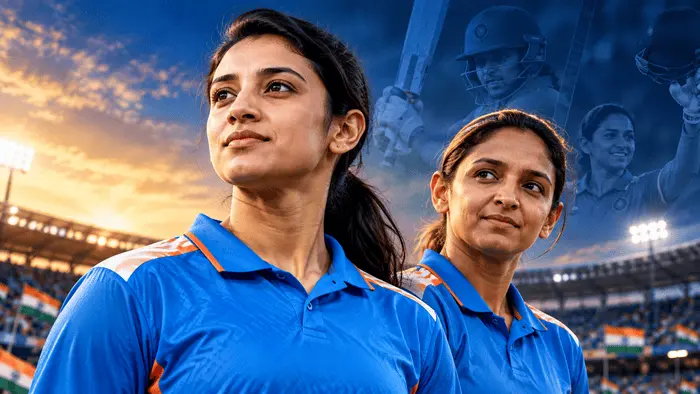
Table of Contents
- Smriti Mandhana Named India Women’s New Captain
- Why Harmanpreet Kaur Stepped Down
- Harmanpreet Kaur’s Legacy as India Captain
- What Smriti Mandhana Brings to the Role
- How Mandhana Could Change India’s Leadership Style
- The Challenge of Balancing Batting and Captaincy
- Harmanpreet Staying as a Player: Why It Matters
- Could India’s Playing XI Change Under Mandhana?
- T20I and ODI Captaincy: Different Challenges
- Mandhana’s WPL Leadership Experience
- Zimbabwe Series: Mandhana’s First Assignment
- What This Leadership Change Means for India Women
Smriti Mandhana Named India Women’s New Captain
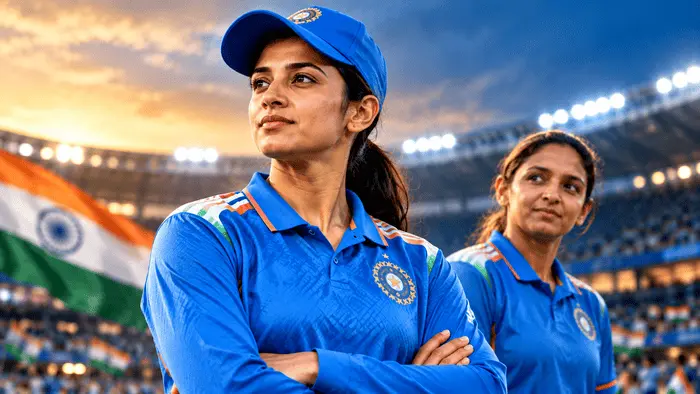
Smriti Mandhana has been appointed the new captain of the Indian Women’s Cricket Team, marking the start of a new leadership phase for the side. The BCCI confirmed on October 6, 2026, that Mandhana will take charge as India’s full-time white-ball captain after Harmanpreet Kaur stepped down from captaincy across all formats.
The appointment is not entirely new territory for Mandhana. She has already led India in 18 T20Is and four ODIs, giving her international captaincy experience before taking on the full-time role. She has also captained Royal Challengers Bengaluru to two Women’s Premier League titles, in 2024 and 2026.
Mandhana has been part of the Indian setup since 2013 and now inherits a team coming off a period of major success under Harmanpreet. Her first major assignment will be the home series against Zimbabwe, beginning with three T20Is in Raipur from October 16, followed by three ODIs in Vadodara.
The immediate challenge for Mandhana will therefore be more than simply wearing the captain’s armband. She will need to establish her own leadership approach while maintaining continuity within a squad that still includes Harmanpreet Kaur as a player. That balance could define the early phase of India’s new captaincy era.
Why Harmanpreet Kaur Stepped Down
Harmanpreet Kaur stepped down as India Women’s captain across all formats on October 6, 2026, bringing her long leadership tenure to an end. Importantly, this was a captaincy change, not an international retirement. Harmanpreet confirmed that she intends to continue representing India as a player and support the team under its new leadership.
In her statement, Harmanpreet described the decision as difficult but said she believed it was the right time to hand over the responsibility and allow the team to move forward under new leadership. The BCCI also framed the decision as the closing of an important chapter in her leadership journey rather than the end of her contribution to Indian cricket.
There is also reporting that the decision followed a BCCI review meeting in Guwahati, where the team’s recent performances were assessed. The Indian Express reported that selectors had pushed for a leadership change after India failed to reach the knockout stage of the T20 World Cup for a second successive time. That detail has been reported by the media, but the BCCI’s official statement does not give poor results as the stated reason for Harmanpreet’s resignation.
The timing also comes after Harmanpreet had already delivered some of the biggest achievements in Indian women’s cricket, including the country’s maiden Women’s Cricket World Cup title in 2025 and a second consecutive Asian Games gold medal in 2026. Her decision therefore represents a planned leadership transition, with Smriti Mandhana now expected to take India into its next phase.
Harmanpreet Kaur’s Legacy as India Captain
Harmanpreet Kaur leaves the India Women captaincy with a record that has changed the history of the team. She led India in 211 matches across formats, including five Tests, 51 ODIs and 155 T20Is, making her one of the most experienced leaders in women’s international cricket.
The defining achievement of her tenure came in 2025, when India won their first-ever Women’s Cricket World Cup. Harmanpreet became only the third Indian captain after Kapil Dev and MS Dhoni to lead the country to a 50-over World Cup title. That triumph completed a long journey that had also included India reaching the 2020 T20 World Cup final and multiple other major tournament campaigns.
Her leadership also produced back-to-back Asian Games gold medals. India won the women’s cricket title in 2023 and successfully defended it in 2026, with Harmanpreet captaining the team in both finals. She also became the first player to captain a side in more than 150 T20Is.
Mandhana therefore takes over from a captain who leaves behind major trophies, international experience and a strong competitive identity. The challenge now is to build on that foundation while developing a leadership style of her own.
What Smriti Mandhana Brings to the Role
Smriti Mandhana brings a combination of international experience, batting consistency and proven leadership into the India Women captaincy. She has been part of the national setup since 2013 and has already captained India in 18 T20Is and four ODIs before receiving the full-time white-ball role.
Her leadership credentials have also developed through franchise cricket. Mandhana led Royal Challengers Bengaluru to Women’s Premier League titles in 2024 and 2026, giving her experience of managing a competitive squad while dealing with high expectations and different player personalities.
There is also considerable weight behind her performance as a batter. The ICC reported that Mandhana recently became the leading run-scorer in women’s international cricket, moving past Mithali Raj. She also holds the record for the most international centuries in women’s cricket across formats, with 18.
More importantly, Mandhana has already worked closely with Harmanpreet as her deputy. That familiarity should help the transition feel less disruptive. Her own comments suggest she understands the responsibility involved and intends to keep learning while leading India forward.
How Mandhana Could Change India’s Leadership Style
Mandhana’s leadership is unlikely to mean an immediate overhaul of India Women’s playing philosophy. Her first priority should be to maintain the team’s existing strengths while bringing her own approach to decision-making, communication and game management.
One potential change could be a greater emphasis on clarity and long-term planning. Mandhana had already spoken about the need for India to learn from repeated mistakes and develop a clear roadmap toward the 2028 T20 World Cup. That suggests her captaincy could focus strongly on consistency rather than making short-term changes after individual results.
Her experience as Harmanpreet’s deputy should also make the transition smoother. Mandhana understands the current dressing room, while her WPL leadership experience has given her additional exposure to managing players in a high-pressure environment.
At the same time, Mandhana has said she expects to keep learning in the role. That could be important because captaincy will test her differently across formats. The early Zimbabwe series should provide the first real indication of how she handles tactical calls, player rotation and pressure as India’s full-time white-ball leader.
The Challenge of Balancing Batting and Captaincy
The biggest personal challenge for Smriti Mandhana will be balancing her responsibilities as India’s leading batter with the demands of captaincy. As an opening batter, she is expected to provide stability and momentum at the top of the order, while the captaincy adds tactical decisions before and during every match.
Mandhana has already experienced that balance at franchise level with Royal Challengers Bengaluru, where she led the side to two WPL titles. International cricket, however, brings a different level of scrutiny, particularly when a captain’s own batting form becomes part of the discussion.
Her comments after India’s 2026 T20 World Cup campaign also suggest that she is thinking beyond individual performances. Mandhana spoke about learning from repeated mistakes and developing a clear roadmap toward the 2028 T20 World Cup. That long-term approach could become an important part of her captaincy.
The key will be avoiding an excessive workload. Mandhana does not need to personally solve every problem on the field. Building a strong leadership group around experienced players such as Harmanpreet Kaur and Deepti Sharma could allow her to focus on both her batting and the larger tactical picture.
Harmanpreet Staying as a Player: Why It Matters
Harmanpreet Kaur’s decision to continue as a player could make the leadership transition considerably smoother for India Women. Rather than losing one of the team’s most experienced players at the same time as changing captain, India can retain her knowledge and experience within the dressing room.
The importance of that experience is particularly relevant for Mandhana. Harmanpreet has already worked alongside her for years, with Mandhana serving as vice-captain before taking over the leadership role. That existing relationship should help the new captain manage the transition without creating an immediate break from the team’s established leadership structure.
The selection for the upcoming Zimbabwe series confirms that Harmanpreet remains part of India’s plans. She has been named in both the T20I and ODI squads, while Mandhana is listed as captain across both formats.
Harmanpreet can therefore play a valuable senior-player role without carrying the formal responsibility of captaincy. Her presence could provide Mandhana with an experienced sounding board, particularly during tight matches and important tactical moments, while also giving younger players another established leader to learn from.
Could India’s Playing XI Change Under Mandhana?
A change in captain does not automatically mean a major overhaul of India Women’s playing XI. The squad selected for the Zimbabwe series suggests that the selectors are prioritising continuity alongside the leadership transition. Smriti Mandhana remains captain, while Harmanpreet Kaur, Shafali Verma and Deepti Sharma continue to feature in the squads.
The balance could still evolve as Mandhana becomes more familiar with her responsibilities. In T20Is, India have a broader group of options, including Niki Prasad, Anushka Sharma, G Kamalini and Minnu Mani. The ODI squad also includes Pratika Rawal, Harleen Deol, Tejal Hasabnis and Sayali Satghare, giving the new captain different combinations to consider.
The most likely change is therefore not a wholesale rebuild but greater competition for places. Mandhana will have to decide how much experience to retain and when to give younger players extended opportunities, particularly with the next major World Cup cycle already in view.
The Zimbabwe series will provide the first meaningful evidence of her selection philosophy. With three T20Is followed by three ODIs, Mandhana gets an early opportunity to establish preferred combinations while maintaining the core that has already delivered major results for India.
T20I and ODI Captaincy: Different Challenges
Mandhana’s first major test will be managing two formats with very different tactical demands. In T20Is, decisions often have to be made within a few deliveries. Bowling changes, match-ups, field placements and batting intent can quickly determine the result, leaving little room for hesitation.
ODIs require a broader approach. Captains have more time to build an innings, rotate bowlers and manage phases of the game, while squad balance and workload become increasingly important. Mandhana will need to adjust her decision-making rather than use exactly the same strategy across both formats.
Her immediate opportunity comes against Zimbabwe, with three T20Is scheduled in Raipur on October 16, 18 and 20, followed by three ODIs in Vadodara on October 23, 25 and 28. It will be India’s first bilateral international series against Zimbabwe in women’s cricket.
The six-match assignment gives Mandhana a useful starting point because she will have consecutive opportunities to test her leadership in both formats. How she manages combinations, bowling resources and game situations could offer the clearest early indication of the captain India can expect going forward.
Mandhana’s WPL Leadership Experience
Smriti Mandhana does not enter the India captaincy without recent leadership experience. Her time as captain of Royal Challengers Bengaluru in the Women’s Premier League has given her an important platform to develop as a leader in a high-pressure environment.
Mandhana guided RCB to the WPL title in 2024 and 2026, a record that strengthens her credentials beyond her international batting career. Leading a franchise also requires managing players from different backgrounds, handling match-day pressure and making tactical decisions while remaining involved as a top-order batter.
That experience should be useful with India, although international captaincy brings different pressures. At national level, Mandhana will have to manage a settled core of senior players alongside younger members of the squad, while also dealing with the expectations attached to leading one of the world’s strongest women’s teams.
The BCCI specifically highlighted her success with RCB when announcing her appointment. Her WPL record therefore forms an important part of the case for Mandhana as India’s new full-time white-ball captain, rather than the change being based only on her standing as a premier batter.
Zimbabwe Series: Mandhana’s First Assignment
The Zimbabwe series will be Smriti Mandhana’s first assignment as India Women’s full-time white-ball captain. It gives her an immediate opportunity to establish her leadership approach across both T20Is and ODIs rather than having to wait for a major tournament.
India will play three T20Is in Raipur on October 16, 18 and 20, followed by three ODIs in Vadodara on October 23, 25 and 28. The series is also significant because it will be the first-ever bilateral international meeting between the Indian and Zimbabwe women’s teams.
The selection also points toward continuity. Harmanpreet Kaur has been included in both squads, while Shafali Verma, Richa Ghosh and Deepti Sharma remain important parts of the group. Shafali has been named T20I vice-captain, while Deepti will serve as vice-captain in the ODI format.
For Mandhana, the objective will be bigger than simply winning the series. These six matches should help her test combinations, establish communication with the squad and begin shaping India’s next phase. With both formats included, Zimbabwe provides a useful first examination of her tactical and leadership decisions.
What This Leadership Change Means for India Women
Smriti Mandhana taking over from Harmanpreet Kaur marks the beginning of a new phase for India Women rather than a complete reset. The core of the team remains intact, while the leadership responsibility now moves to a player who has already worked closely with Harmanpreet and gained captaincy experience at international and WPL level.
The immediate priority will be establishing continuity. Harmanpreet remains available as a player, giving Mandhana access to one of India’s most experienced voices while allowing the new captain to develop her own tactical identity.
Mandhana has also indicated that India need a clear roadmap after their recent T20 World Cup disappointment. That makes the next phase particularly important. The team will need to balance experienced campaigners with younger players while building towards the 2028 T20 World Cup.
The Zimbabwe series provides the first practical test of that transition. If Mandhana can combine clear decision-making with strong communication and maintain India’s competitive standards, the captaincy change could become a smooth handover rather than a disruptive rebuild.
Frequently Asked Questions
Smriti Mandhana is the new full-time white-ball captain of the Indian Women’s Cricket Team. She takes over from Harmanpreet Kaur, who stepped down from captaincy across all formats on October 6, 2026.
No. Harmanpreet Kaur has stepped down from the captaincy but will continue playing for India. She has also been selected in both the T20I and ODI squads for the upcoming Zimbabwe series.
Mandhana’s first assignment as full-time captain will be India’s home white-ball series against Zimbabwe. The first T20I is scheduled for October 16, 2026, in Raipur.
Yes. Before becoming the full-time captain, Mandhana had led India in 18 T20Is and four ODIs. She has also captained Royal Challengers Bengaluru to two Women’s Premier League titles.
Her immediate challenge is to establish her leadership style while maintaining team continuity. The six-match Zimbabwe series will give her an early opportunity to manage both T20I and ODI cricket.
Final Verdict
Smriti Mandhana’s appointment as India Women’s new full-time white-ball captain represents a significant leadership transition, but it does not require India to start from scratch. Harmanpreet Kaur remains part of the team as a player, while several experienced players continue to provide stability around the new captain.
Mandhana already has international and WPL captaincy experience, but the next phase will test how effectively she can translate that experience into long-term results for India. Her ability to balance batting responsibilities, tactical decisions and squad development will be central to her success.
The Zimbabwe series offers an important first checkpoint. Six matches across T20Is and ODIs will give Mandhana an early opportunity to establish her preferred combinations and leadership style.
Ultimately, the success of this transition will not be judged by one series. The bigger measure will be whether Mandhana can build a confident, consistent India Women’s side capable of competing for major trophies in the next World Cup cycle.
Sources
The following official and reputable sources were used to verify the leadership change, Harmanpreet Kaur’s decision, Smriti Mandhana’s appointment and the upcoming Zimbabwe series.
- BCCI — Smriti Mandhana Appointed Captain of Indian Women’s Cricket Team
- BCCI — Harmanpreet Kaur’s Leadership and Contribution to Indian Cricket
- BCCI — India Women’s Squads for Zimbabwe Series
- ICC — India Name New Captain After Harmanpreet Kaur Steps Down
- ICC — Mandhana Takes Charge as India Name Zimbabwe Squads
- The Indian Express — Smriti Mandhana Named India Women’s Captain