
Ireland vs Afghanistan ODI Series 2026: New Eras Begin for Both Teams
Gary Wilson begins his first series as Ireland head coach while Rahmat Shah leads Afghanistan into a new ODI captaincy era.
Ireland and Afghanistan begin their five-match ODI series on August 5, 2026, with both teams entering important new phases. Ireland return to 50-over international cricket after a 15-month gap under new head coach Gary Wilson, while Afghanistan start a fresh leadership chapter with Rahmat Shah as ODI captain.
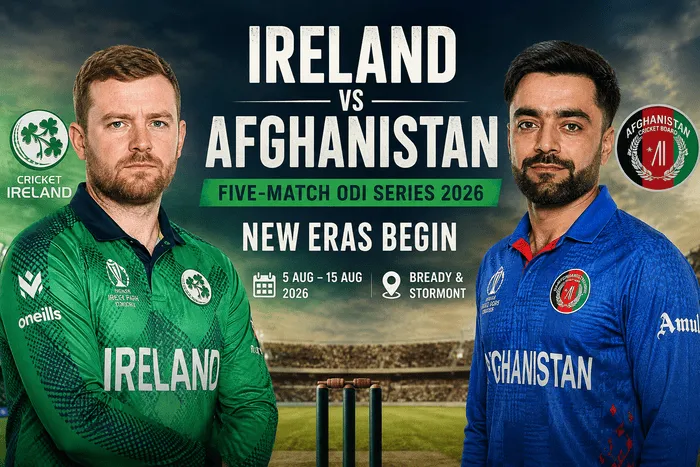
Ireland and Afghanistan Begin New ODI Eras
Ireland and Afghanistan enter their five-match ODI series with significant changes in leadership, making the August 2026 contest an important starting point for both teams.
The series begins at Bready on August 5 with both sides looking beyond the immediate result. Ireland are returning to ODI cricket after a gap of around 15 months and will play their first series under new men’s head coach Gary Wilson. According to Cricket Ireland’s official ODI squad announcement , the series also provides opportunities for players who have pushed their cases during Ireland’s absence from the 50-over international format.
Afghanistan, meanwhile, begin a new leadership chapter with Rahmat Shah as ODI captain. The Afghanistan Cricket Board confirmed Rahmat Shah’s appointment as the new Test and ODI captain, with Rahmanullah Gurbaz named vice-captain in both formats.
Those changes give the series a different context from a routine bilateral contest. Ireland need to rebuild their rhythm in the 50-over format while integrating players who have earned opportunities during a period in which the senior side played no ODI cricket. Afghanistan must adapt to a captaincy transition while maintaining the standards expected from an experienced international group.
Two Teams, Two Different Transitions
Ireland’s transition is centered largely on coaching, player availability and squad depth. Wilson begins his tenure with Paul Stirling back as captain, but several established players were unavailable when the squad for the opening three ODIs was selected.
Afghanistan’s change is primarily at leadership level. Rahmat Shah has taken over the Test and ODI captaincy following Hashmatullah Shahidi’s departure from the role, while Rahmanullah Gurbaz has been appointed vice-captain in the two formats.
| Team | Major Change | Key Figure |
|---|---|---|
| Ireland | New head coach and return to ODI cricket | Gary Wilson |
| Ireland | Captain returns to the ODI side | Paul Stirling |
| Afghanistan | New Test and ODI captain | Rahmat Shah |
| Afghanistan | New Test and ODI vice-captain | Rahmanullah Gurbaz |
Why This Five-Match Series Matters
Five ODIs give both teams more time to establish combinations than a short two or three-match series would provide. Ireland can assess how quickly their experienced core and emerging players adjust to 50-over cricket, while Afghanistan can begin defining how the team operates under Rahmat’s leadership.
The opening matches at Bready should provide the first evidence of how those transitions are progressing. The series then moves to Stormont for the final three ODIs, giving both coaching groups opportunities to adapt their plans as the contest develops.
Series in Focus
The central storyline is not simply Ireland versus Afghanistan. Ireland are beginning Gary Wilson’s coaching era after a lengthy absence from ODI cricket, while Afghanistan are starting their 50-over journey under Rahmat Shah’s captaincy. That makes the five-match series an early measure of two changing teams.
Ireland Return to ODI Cricket After 15 Months
Ireland’s opening match against Afghanistan marks their return to men’s ODI cricket after a gap of roughly 15 months, adding another layer of importance to the five-match home series.
Ireland have spent an extended period away from the 50-over international format, so the Afghanistan series represents more than another home assignment. The opening ODI gives the squad its first opportunity in around 15 months to rebuild the rhythms and tactical patterns required in one-day international cricket.
That adjustment will be one of the key challenges for Gary Wilson and his players. ODI cricket demands longer batting partnerships, careful management of the middle overs and a bowling attack capable of creating wickets while controlling the scoring rate across 50 overs.
Paul Stirling Adds Experience at the Top
The return of Paul Stirling is particularly valuable in that context. Ireland’s captain brings extensive ODI experience and gives the batting order an established presence as the team returns to the format.
Andrew Balbirnie, Harry Tector, George Dockrell, Andrew McBrine, Mark Adair, Curtis Campher and Lorcan Tucker also provide an experienced core. Their familiarity with international 50-over cricket should help Ireland manage the transition back into the format while less experienced players compete for opportunities.
Ireland Need to Rebuild Their 50-Over Rhythm Quickly
A five-match series gives Ireland more room to make that adjustment than a shorter bilateral contest. The challenge, however, begins immediately. Afghanistan arrive with an established group of international players and can punish a side that takes too long to settle into its ODI roles.
The first two matches at Bready should therefore be particularly informative. Ireland will be looking for signs that their batting combinations, bowling plans and fielding standards can translate quickly into the longer white-ball format.
Why the ODI Gap Matters
Fifteen months without an ODI creates a different challenge from an ordinary series break. Ireland have experienced players, but they still need to rediscover the tempo of 50-over international cricket while Gary Wilson begins implementing his ideas as head coach.
Gary Wilson Begins First Series as Ireland Head Coach
The Afghanistan ODIs mark Gary Wilson’s first series in charge of the Ireland men’s team, giving the former international cricketer an immediate opportunity to shape the side’s approach in 50-over cricket.
Wilson begins his tenure at an important moment. Ireland have not played an ODI for around 15 months, several established players are unavailable, and the selectors have included emerging players who could receive significant opportunities during the series.
Ahead of the Afghanistan contest, Wilson emphasized an approach built around reading conditions and playing dynamic cricket. Ireland want their bowlers to search for wickets rather than simply contain, while maintaining an aggressive standard in the field.
An Early Test of Wilson’s Approach
Afghanistan should provide a useful measure of that philosophy. Their squad contains experienced international players, so Ireland will need to balance controlled 50-over cricket with the positive approach their new head coach wants to establish.
Wilson also has the benefit of an experienced leadership group. Paul Stirling returns as captain, while Andrew Balbirnie, Harry Tector, George Dockrell, Andrew McBrine, Mark Adair, Curtis Campher and Lorcan Tucker give the squad a core of players familiar with the demands of international cricket.
Five Matches Give Ireland Time to Develop
A five-match series offers Wilson more than a one-game assessment. Ireland can test different combinations, evaluate emerging players and adjust their plans as conditions change between Bready and Stormont.
That makes the Afghanistan series an important starting point rather than a finished product. Results will matter, but Ireland will also be looking for evidence that Wilson’s preferred style can provide a sustainable direction for the team’s return to ODI cricket.
New Coaching Chapter
Gary Wilson’s first assignment combines immediate competitive pressure with a longer-term opportunity. How Ireland balance experienced internationals with newer players, while adopting a proactive approach with the ball and in the field, will be one of the major themes of the series.
Ireland Team News and Squad Depth
Ireland have named a 14-player squad for the opening three ODIs against Afghanistan, with Paul Stirling returning to lead a group that combines established internationals with several emerging options.
Stirling’s return provides Ireland with an experienced captain at the top of the order as the team resumes ODI cricket after a lengthy absence. Andrew Balbirnie, Harry Tector, George Dockrell, Andrew McBrine, Mark Adair, Curtis Campher and Lorcan Tucker give Gary Wilson a strong core of players with substantial international experience.
The squad also reflects Ireland’s need to test its depth. Byron McDonough has received his first senior international call-up, while Jai Moondra and Ben Calitz are in contention to add ODI cricket to their international experience.
Those opportunities are partly a result of player availability. Ireland confirmed that several established bowling options were not available for selection in the initial squad while continuing their respective injury rehabilitation and return-to-play programs.
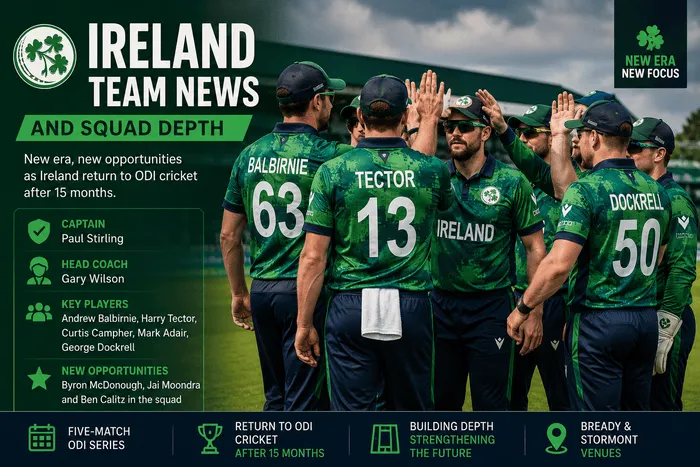
Ireland Squad for the Opening Three ODIs
| Player | Squad Status |
|---|---|
| Paul Stirling | Captain |
| Mark Adair | Selected |
| Andrew Balbirnie | Selected |
| Ben Calitz | Selected |
| Curtis Campher | Selected |
| Cade Carmichael | Selected |
| George Dockrell | Selected |
| Gavin Hoey | Selected |
| Andrew McBrine | Selected |
| Liam McCarthy | Selected |
| Byron McDonough | Maiden senior call-up |
| Jai Moondra | ODI uncapped |
| Harry Tector | Selected |
| Lorcan Tucker | Selected |
Injuries Test Ireland’s Bowling Depth
Ireland entered the series without a number of familiar bowling options in their initial selection. Josh Little, Matt Hollard, Craig Young, Barry McCarthy, Jordan Neill and David Delany were unavailable as they continued injury recovery or return-to-play programs.
Their absence increases the importance of Mark Adair, Curtis Campher, Andrew McBrine and the other available bowlers. It also gives Wilson and the selectors an opportunity to assess how Ireland’s next group of players responds against an experienced Afghanistan side.
Squad Could Change Before the Final Two ODIs
Ireland initially selected the group for the first three matches rather than locking in one squad for the entire five-game series. The fitness of unavailable players is expected to be reassessed before the final two ODIs, leaving open the possibility of changes later in the series.
That makes squad depth one of Ireland’s most important storylines. The series is not only about returning to ODI cricket; it is also an opportunity to determine which emerging players can strengthen the team’s options alongside its established core.
Ireland Squad Watch
Ireland’s initial squad combines an experienced core with genuine opportunities for newer players. With several established bowlers unavailable, performances during the opening three ODIs could influence selection decisions when the squad is reviewed for the final two matches.
New Opportunities for Ireland’s Emerging Players
Ireland’s return to ODI cricket has opened the door for several emerging players, with Byron McDonough, Jai Moondra and Ben Calitz among the names looking to strengthen the team’s long-term depth.
Byron McDonough is one of the most notable additions to Ireland’s squad. The Leinster Lightning player earned his maiden senior international call-up after impressing in domestic 50-over cricket, giving him an opportunity to push his case at the highest level.
Jai Moondra and Ben Calitz provide another layer of intrigue. Both have already experienced international cricket in the T20I format but entered the Afghanistan series without an ODI appearance, making them potential new options as Ireland rebuild their 50-over setup.
Domestic Performances Create a Pathway
Ireland’s long absence from ODI cricket did not mean competition for places stopped. Players continued to build their cases through domestic performances, and the Afghanistan series gives the coaching staff a chance to see whether that form can translate to international 50-over cricket.
For McDonough in particular, selection is a significant step. A first senior call-up places him alongside experienced internationals and gives him exposure to a five-match series in which squad combinations could evolve as Ireland assess their available resources.
More Than Short-Term Injury Cover
The absence of several established players has created immediate vacancies, but Ireland can use the situation for longer-term planning. Strong performances from emerging players would increase competition even when the injured members of the squad become available again.
That depth will be important as Wilson develops the team beyond this series. Ireland need established performers to deliver, but they also need a broader group capable of stepping into international cricket when injuries, form or scheduling require changes.
| Player | Opportunity |
|---|---|
| Byron McDonough | Maiden senior Ireland call-up |
| Jai Moondra | Opportunity to make ODI debut |
| Ben Calitz | Opportunity to make ODI debut |
Players to Watch
McDonough, Moondra and Calitz give this series additional importance for Ireland’s future planning. The immediate challenge is Afghanistan, but successful performances from the newer members of the squad could leave Ireland with greater selection depth once their established players return.
Rahmat Shah Begins Afghanistan ODI Captaincy Era
Afghanistan enter the Ireland series under new ODI leadership, with experienced batter Rahmat Shah taking over as captain and Rahmanullah Gurbaz serving as vice-captain.
Afghanistan’s five-match series in Ireland marks an important leadership transition. Rahmat Shah was appointed captain of the Test and ODI sides after Hashmatullah Shahidi stepped down from the role, putting one of Afghanistan’s most experienced batters at the center of their next phase in 50-over cricket.
Rahmanullah Gurbaz has been named vice-captain in both formats. The combination gives Afghanistan a leadership group with substantial international experience while allowing the team to establish a new direction without completely changing its established core.
Rahmat Brings Experience to the Captaincy
Rahmat has been a long-standing part of Afghanistan’s ODI batting unit and understands the demands of constructing an innings across 50 overs. His first challenge as the new ODI captain will be to translate that experience into decisions for the entire side.
The Ireland series should provide an early indication of his approach. Conditions at Bready and Stormont can require adjustment from visiting teams, particularly when movement and changing weather influence how aggressively batters can play and how bowlers use the new ball.
| Leadership Role | Afghanistan |
|---|---|
| ODI Captain | Rahmat Shah |
| ODI Vice-Captain | Rahmanullah Gurbaz |
| Previous ODI Captain | Hashmatullah Shahidi |
| First Series Under New ODI Leadership | Ireland, August 2026 |
A Five-Match Series Gives the New Leadership Time
Five matches provide Rahmat with a useful first assignment. Instead of judging the new leadership structure on a single ODI, Afghanistan will have opportunities to respond to different match situations, adjust combinations and refine plans as the series progresses.
The move from Bready for the opening two games to Stormont for the final three should add another tactical challenge. How Afghanistan adapt between venues, manage their resources and respond to setbacks will offer an early look at the team’s direction under Rahmat.
Afghanistan Start a New Chapter Without Starting From Zero
A captaincy change does not necessarily mean Afghanistan need a complete rebuild. The side already possesses considerable international experience, so the more immediate task is establishing how responsibilities and tactical decisions evolve under the new leadership group.
That makes the Ireland series especially relevant. For Rahmat, it is the beginning of his ODI captaincy tenure. For Afghanistan, it is the first opportunity to establish how an experienced team will operate under a different voice at the top.
Afghanistan’s New Leadership
Rahmat Shah’s appointment represents a leadership transition rather than a complete reset. With Rahmanullah Gurbaz as his deputy and an experienced group around them, the five ODIs in Ireland provide the first extended test of Afghanistan’s new 50-over leadership structure.
Why the Bready ODI Opener Matters
The Ireland vs Afghanistan ODI Series 2026 begins at Bready on August 5, giving both teams an immediate opportunity to establish momentum under their new leadership structures.
The opening ODI carries additional significance because Bready is not a regular venue for men’s one-day internationals. With limited ODI history at the ground, both teams will need to assess the conditions quickly rather than rely heavily on an extensive record of previous international matches at the venue.
For Ireland, the first match is their return to ODI cricket after roughly 15 months and the beginning of Gary Wilson’s tenure as men’s head coach. For Afghanistan, it is the first ODI series under new captain Rahmat Shah. Those storylines make the Bready opener an important early test for both sides.
Conditions Could Shape the Opening Contest
The early stages should reveal how quickly the teams read the surface and overhead conditions. Ireland’s familiarity with home conditions could be useful, but Afghanistan have enough international experience to adjust if the ball moves or scoring proves difficult during parts of the innings.
New-ball discipline could therefore be important. Ireland are missing several established bowling options from their initial squad, increasing the responsibility on the available attack. Afghanistan, meanwhile, will need their batting unit to adapt quickly rather than allowing early wickets to dictate the match.
Two Matches at Bready Before the Series Moves to Stormont
Bready hosts both the first and second matches of the five-match series. That gives the teams an opportunity to learn from the opener and make tactical adjustments when they return to the same venue on August 7.
The final three Ireland vs Afghanistan ODIs will then move to Stormont. As a result, success at Bready could give either team an important platform before the second half of the series begins at a different venue.
| Opening Match | Ireland vs Afghanistan 1st ODI |
|---|---|
| Date | August 5, 2026 |
| Venue | Bready Cricket Club |
| Scheduled Start | 10:45 AM local time |
| Second ODI | August 7, 2026 at Bready |
Why the First ODI Is Important
The Bready opener brings several storylines together: Ireland’s return to 50-over international cricket, Gary Wilson’s first series in charge and Rahmat Shah’s new Afghanistan ODI captaincy. An early victory would give either team valuable momentum in a five-match contest that later moves to Stormont.
Ireland vs Afghanistan ODI Series 2026 Schedule
The Ireland vs Afghanistan ODI Series 2026 features five matches from August 5 to August 15, with the opening two games at Bready before the series moves to Stormont for the final three ODIs.
The five-match schedule gives Ireland and Afghanistan a substantial block of 50-over cricket rather than a short bilateral series. Bready hosts the opening matches on August 5 and August 7, before both teams travel to Stormont for the remainder of the contest.
The third ODI is scheduled for August 10, followed by the fourth on August 12 and the series finale on August 15. All five matches are scheduled to begin at 10:45 AM local time.
| Match | Date | Venue | Start Time |
|---|---|---|---|
| 1st ODI | August 5, 2026 | Bready | 10:45 AM local |
| 2nd ODI | August 7, 2026 | Bready | 10:45 AM local |
| 3rd ODI | August 10, 2026 | Stormont | 10:45 AM local |
| 4th ODI | August 12, 2026 | Stormont | 10:45 AM local |
| 5th ODI | August 15, 2026 | Stormont | 10:45 AM local |
Series Moves From Bready to Stormont
Playing consecutive matches at the same venue gives both teams an opportunity to respond quickly to what they learn in the opener. Any tactical mistakes made during the first Ireland vs Afghanistan ODI can be addressed before the teams meet again at Bready two days later.
The move to Stormont then creates another adjustment point. The final three matches could test squad depth, workload management and each team’s ability to adapt as the series develops.
Five ODIs Provide Room for the Series to Evolve
The length of the series is particularly useful given the changes surrounding both teams. Ireland can assess players and combinations during their return to ODI cricket, while Afghanistan have several matches to develop their plans under Rahmat Shah’s new leadership.
With matches spread across 11 days, the Ireland Afghanistan ODI series should provide a clearer picture of each team’s progress than a shorter assignment would offer.
Schedule at a Glance
Bready hosts the first two ODIs on August 5 and 7, while Stormont stages the final three on August 10, 12 and 15. The change of venue midway through the series gives both teams another tactical challenge as the five-match contest develops.
What the Ireland vs Afghanistan ODI Series Means for Both Teams
The Ireland vs Afghanistan ODI Series 2026 gives both sides an important opportunity to establish direction, evaluate squad depth and build greater stability in 50-over cricket.
Although results will remain the immediate priority, this five-match series has significance beyond the final scoreline. Ireland are returning to ODI cricket after a long absence and beginning a new coaching chapter, while Afghanistan are adapting to a change in their 50-over leadership.
Those circumstances make the series useful for evaluating how quickly both teams can settle into their new structures. Five matches also provide enough time for coaches and selectors to identify patterns rather than drawing conclusions from a single performance.
Ireland Can Assess Their ODI Depth
Ireland’s immediate challenge is to regain their 50-over rhythm while dealing with the absence of several established players. That situation creates opportunities for less experienced members of the squad and gives Gary Wilson an early look at the depth available to him.
Strong performances from emerging players could increase competition for future selection. At the same time, experienced names such as Paul Stirling, Harry Tector, Andrew Balbirnie and the team’s established all-rounders have an important role in providing stability during the transition.
Afghanistan Can Establish Rahmat Shah’s Leadership
For Afghanistan, the Ireland tour provides the first extended ODI test of the new captaincy structure. Rahmat Shah has five matches to begin establishing his tactical approach, with Rahmanullah Gurbaz supporting him as vice-captain.
Afghanistan do not need to rebuild their entire ODI identity, but leadership changes can alter decision-making, player responsibilities and match management. The conditions in Ireland should provide a useful early examination of how the side responds under Rahmat.
Momentum Could Matter Beyond This Series
Bilateral ODI cricket is also valuable because it allows teams to strengthen combinations that may become important in future international assignments. Batting roles, bowling partnerships and finishing options can all become clearer across a five-match contest.
That is why the Ireland vs Afghanistan 2026 series should be viewed as more than five isolated matches. Ireland are trying to restart their ODI program with renewed depth and a new coaching direction, while Afghanistan are beginning another phase under a different captain.
| Team | Key Series Objective |
|---|---|
| Ireland | Re-establish ODI rhythm after a lengthy gap |
| Ireland | Assess squad depth and emerging players |
| Ireland | Begin developing Gary Wilson’s approach |
| Afghanistan | Establish Rahmat Shah’s ODI leadership |
| Afghanistan | Adapt plans to Irish conditions |
| Both Teams | Build stronger 50-over combinations |
Bigger Picture
Ireland need the series to provide clarity around their returning ODI setup and squad depth. Afghanistan need it to begin establishing their new leadership structure. By the end of five matches, both teams should have a clearer picture of the areas that are working and those that still require improvement.
Ireland vs Afghanistan ODI Series 2026 FAQs
Key questions about the Ireland vs Afghanistan ODI Series 2026, including the schedule, venues, leadership changes and Ireland’s return to 50-over international cricket.
The five-match ODI series begins on August 5, 2026, at Bready. The second ODI is scheduled at the same venue on August 7 before the series moves to Stormont for the final three matches.
Paul Stirling returns to captain Ireland in the ODI series against Afghanistan. His experience will be important as Ireland return to 50-over international cricket after an absence of around 15 months.
Rahmat Shah is Afghanistan’s new ODI captain. He took over the Test and ODI leadership after Hashmatullah Shahidi stepped down, while Rahmanullah Gurbaz was appointed vice-captain in both formats.
Gary Wilson is Ireland’s men’s head coach, and the five-match Afghanistan ODI series is his first series in charge. Ireland are looking to establish their 50-over approach under Wilson while also assessing squad depth.
Bready hosts the first two ODIs on August 5 and August 7. The series then moves to Stormont, which hosts the third, fourth and fifth matches on August 10, August 12 and August 15.
Byron McDonough received his maiden senior Ireland call-up for the opening part of the series, while Jai Moondra and Ben Calitz entered the squad with an opportunity to make their ODI debuts.
The series marks Ireland’s return to ODI cricket after a lengthy gap and Gary Wilson’s first series as head coach. It also begins Afghanistan’s ODI chapter under new captain Rahmat Shah, giving both teams five matches to develop combinations and assess their 50-over direction.
Final Thoughts on the Ireland vs Afghanistan ODI Series 2026
The five-match series arrives at an important moment for both teams, with Ireland returning to ODI cricket under Gary Wilson and Afghanistan beginning a new 50-over leadership chapter under Rahmat Shah.
The Ireland vs Afghanistan ODI Series 2026 is about more than the result of five bilateral matches. Ireland are returning to the format after roughly 15 months and must quickly rediscover their 50-over rhythm while adapting to the ideas of new men’s head coach Gary Wilson.
Paul Stirling’s return gives Ireland an experienced captain, but injuries have also created opportunities for the wider squad. The performances of players such as Byron McDonough, Jai Moondra and Ben Calitz could provide useful evidence about the depth available to Ireland as they plan beyond this series.
Afghanistan have a different transition to manage. Rahmat Shah begins his ODI captaincy tenure with Rahmanullah Gurbaz as vice-captain, giving the visitors a new leadership structure while retaining an experienced international core.
The two matches at Bready followed by three at Stormont should give both teams enough time to adjust their tactics and combinations. By the end of the series on August 15, Ireland and Afghanistan should have a much clearer picture of how their new ODI chapters are developing.
Readers following the latest cricket coverage can also explore the 99ExCh app download guide for information about mobile access, or read the 99ExCh ID creation guide for account setup information.
Series Outlook
Ireland need to rebuild ODI rhythm, evaluate their squad depth and establish Gary Wilson’s approach. Afghanistan need to settle into Rahmat Shah’s leadership. With five matches across Bready and Stormont, the series gives both teams a meaningful opportunity to turn those transitions into a clearer 50-over direction.